
MoLiHua
A teacher performance.

Pancake makeup. Red embroidered tops. Phonetically-spoken Chinese.
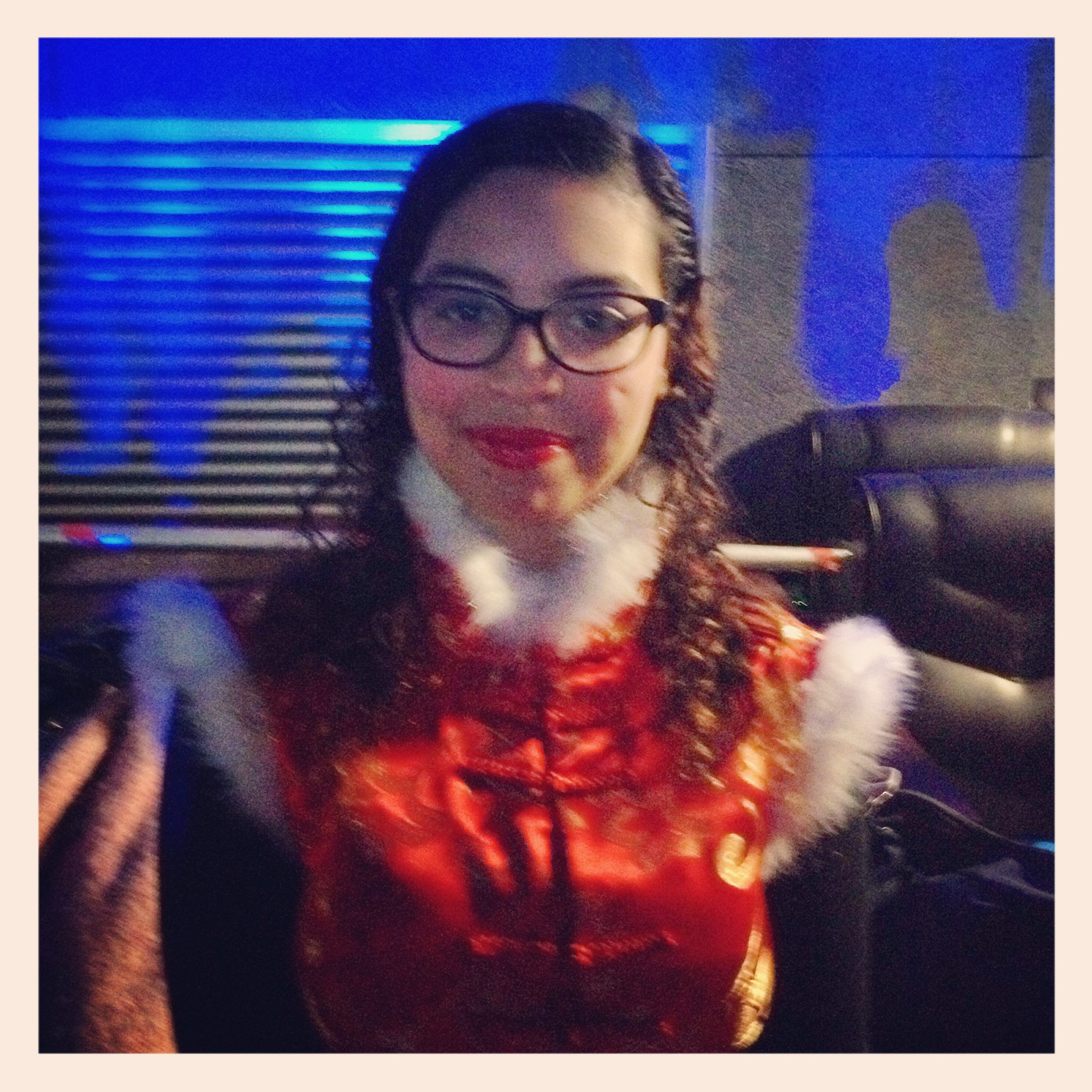
When I was in my first year teaching in China, our HR director asked if any of the foreign staff would be interested in singing a song on local television. My colleagues and I volunteered.
We were a ragtag crew. First, there was us newbies, mostly from the United States. The veteran teachers were those that were used to these kinds of strange requests from the admin. We also had a big German guy who went early every weekend 2 hours across town to go to the traveling “German bakery” that came from Shanghai. Then there was Lee and Mathilda.
Lee and Mathilda were a couple that met in Harbin when they first started teaching in China. She was in her 40s, and he was about 28. Despite the age gap, they were perfect for each other. Lee was the type of guy who didn’t give a fuck what the admin wanted. He was from New Jersey and had the attitude to match. Mathilda was more relaxed, but had the same carefree demeanor. She would join us in sneakily smoking on campus and partied harder than any of the younger teachers.
The song chosen by the admin was the Chinese folk song MoLiHua, or Jasmine Flower. After school, we’d practice this slow ballad for an hour or two. I’m not a ballad person, but I enjoyed learning a little bit of Chinese along the way.
When we got to the theater where the show was going to be recorded, we wore Chinese tops with the traditional knotted buttons. They were made especially for the performance, tailored to us, although not especially well. They caked our face in makeup to make us camera-ready.
The performance was uneventful. We watched classically-trained dancers and musicians take their turns before we arrived on stage. They were perfectly coiffed and graceful with their long silk streamers. The women had their hair pulled back in slick buns with flowers pinned to their heads. It was ridiculous: us foreigners were pale with bad foundation and clothed in cheap embroidered fabric.
Once it was our turn, we sang slowly:
好一朵美丽的茉莉花
好一朵美丽的茉莉花
芬芳美丽满枝桠
又香又白人人夸
让我来将你摘下
送给别人家
茉莉花呀茉莉花
Beautiful jasmine flower
Beautiful jasmine flower
Sweet-smelling, beautiful, stems full of buds
Fragrant and white, everyone praises
Let me pluck you down to give to someone
Jasmine flower, jasmine flower
The nerves gone, we walked off stage and waited to take the bus back to school.
We thought our time with MoLiHua was over. Not at all.
Admin asked us to perform it again for the faculty. This was an easy ask, but a strange one. We crowded into our staff lounge and turned on the backing track. Another slow, dragging version of MoLiHua.
It wasn’t the first time admin had asked us to perform, and it wouldn’t be the last. This is what teaching abroad does to you. It turns you into a performer whether you like it or not.
A few years later, a group of 5 of us chose to learn the song Riptide by Vance Joy. One teacher strummed on a ukulele while the rest of us danced around. We could never get the words right, which was ironic because the words were:
Lady, runnin’ down to the riptide
Taken away to the dark side
I wanna be your left-hand man
I love you when you’re singin’ that song
And I got a lump in my throat, ‘cause
You’re gonna sing the words wrong
We also directed many a student performance. There were dancing performances, piano recitals, plays, and poetry recitations. They would have the top students be the MCs, and they would introduce each performance in this crazy Chinese sing-song voice that only performers use. Its tone fluctuated from the highest note possible to the lowest for nearly every sentence, complete with exaggerated hand gestures and head movements.
One time, in my third year at the school, I got my class to perform a rendition of A Christmas Carol that I wrote myself. We changed Ebenezer Scrooge to Eleanor Scrooge to allow for our most talented English speaker to play a prominent role. We rehearsed it for hours. After maybe a week of practice, a Chinese teacher, clearly spurred on by an administrator, sheepishly approached me.
“I don’t think we should have the character say ‘I’m glad she’s dead’”
“But that’s the story. She goes to the future and everyone is happy she is dead.”
“We just don’t know what the parents will think.”
“I don’t care, I’m not changing it.”
I stood my ground, and I heard nothing about it again.
After our second performance of MoLiHua, admin asked us to perform it at another school function, this time with the parents. We would stand in our lines, the tallest teachers in the back and smallest in the front. We climbed up to the stage.
The time came to perform once more. In our red tops, the background music playing, we opened our mouths. We were exhausted before the first note. We had signed up for one performance, and yet here we were on our third.
Lee had had enough.
As we went into our final verse, Lee did a barrel roll to the front of the stage. He got up and started doing what looked like amateur kung fu moves. They were in their own rhythm, nothing that resembled the delicate tone of the song. The rest of us continued while stifling laughter.
After the performance, the head of HR and the principal came up to him. It was obvious to them that this wasn’t planned, but they knew they had to save face and pretend that it was. China is all about face, and losing it was tantamount to social seppuku.
“That was great!” the principal exclaimed.
We plastered on fake smiles and said, “Yeah, that was amazing!”
It was all over. It wasn’t that we disliked the song. It wasn’t that we didn’t want to please admin. It wasn’t that we were lazy.
One of the issues with Chinese schools, as I experienced them, is this tendency to exhibitionism; to roll out the cute kid, the exotic foreigner, or the musical prodigy for every performance. Students and teachers alike also waste hours of school time practicing and rehearsing. Again, forgotten words or a misplaced dance step is frowned upon. The teacher in charge loses face. It quickly grows stale, and causes a lot of eye-rolling among the ‘foreign’ contingent of teachers.
We only wanted to get off the stage and start doing our jobs: teaching.
But, it took a guy from New Jersey to undermine the whole charade in his own inimitable way.
We were never asked to perform MoLiHua again.